Showing posts with label pork belly. Show all posts

Tuesday, June 05, 2012

Pork Belly to Pancetta: Taste in the Making


I’m no stranger to pork belly. Butcher Son regularly brings me home slabs to turn into bacon, which I happily do. I’ve experimented with various rubs: brown sugar, molasses, pepper. I’ve smoked the slabs in a converted Weber and an electric smoker, and used several species of wood chips. But I have never attempted to make anything harder with that pork belly than bacon. Until now….

I decided I wanted to try to make pancetta. I read up on the process in several books I own, and finally chose to follow the directions in Charcuterie, The Craft of Salting, Smoking and Curing by Michael Ruhlman and Brian Polcyn. Then Butcher Son brought me home two 10-pound slabs of pork belly. I cut out the choicest 5-pound piece for the pancetta, and cut the rest to make bacon.

After skinning the slab*, I assembled the ingredients for the curing process. The dry cure used for pancetta is different than that which I use for bacon. The recipe called for pink salt. Initially I thought this meant pink Himalayan salt, but after thinking about it for awhile, I began to wonder why such a specific salt was included, so I did some searching and found that “pink salt” is the trade term for “curing salt” and is actually pink. Unfortunately, I couldn’t find it at any local stores and had to send Mr B off to Williams Sonoma to pick up a jar ($9.50).


Once he returned I mixed the pink salt with garlic, salt, brown sugar, fresh ground black pepper, crushed juniper berries, bay leaves, freshly grated nutmeg and sprigs of fresh thyme from the garden. 


After massaging it in vigorously, I vacuum sealed the slab and placed it in the refrigerator. Every other day I took it out, massaged the belly (called overhauling), and put it back in the fridge. 


After 10 days it was firm and considered cured. At this point it was time to rinse, dry, smear with fresh ground pepper and roll that sucker up for the drying process. Butcher Son asked around and got some good tips on rolling and tying, one of which was that if he didn’t end up with blisters, he was doing it wrong. I thought that was a bit extreme, but shame on me for doubting the experts.


The goal when rolling is for the belly to be as tight as possible with no air in the middle. Rolling the belly isn’t the hard part, it’s the tying that requires brute strength. You start in the middle and work your way out, so that there is little to no air between the interior rolls. After the 4th tie, Butcher Son found himself with missing skin off both his pinkies from tying so tightly. Apparently he just skipped the blister stage.


Once the pancetta is rolled and tied it needs to go into a cool humid place. The book suggests between 50 and 60 degrees and 60 percent humidity. We happen to have an old wine refrigerator that works fine, but is noisy as all get-out. We had to remove it from the dining area due to the issue and it now resides in a corner of the garage. So we plugged it in, placed a pan of ice cubes in the bottom and laid the roll on one of the shelves.

Every afternoon (when it was warmest) we dumped the pan of water and added more ice. Every other day we turned it a quarter turn and checked to make sure that the pancetta was not getting too hard and drying out too much. It takes approximately two weeks to dry sufficiently. You may notice small white dots of mold on the end pieces. This is fine, it will be cut off before eating.

What you want is a semi-firm roll. Too hard and you know you’ve gone too long. There is some shrinkage due to the drying process, so the five-pound pork belly you started with will end up being closer to 4 (and a squosh).

I have to tell you it was mighty hard to wait two weeks to taste it. And Butcher Son wanted to wait three! So we compromised. I cut off one dry end and then 1/2 pound to make some pasta carbonara. And we have stowed the pancetta in the wine fridge for one more week. Meanwhile, it looks gorgeous and tasted heavenly in the carbonara dish. (Served with a salad straight out of our garden and fresh artisan bread baked with our own herbs!)

I think I might use a bit more herbs in the initial curing, and definitely use more pepper prior to the rolling process, but as pancetta goes, this is a winner. Can't wait for the next taste test.

*NOTE: Always ask for skinned pork belly – it will make your life sooooo much easier.

Saturday, May 26, 2012

Going Whole Hog


Well, not really WHOLE hog, just the belly of the beast. Yep, last week we cured, rendered, smoked or ate 20 pounds of pork belly. Now before you get on your high horse about how unhealthy that is, let me tell you that it wasn’t all consumed in one sitting. But I have found that when I am doing anything homemade, more is better. Like canning. Why make 5 jars of jam, when 10 jars are just as easy. Same thing with the belly.

It all began because we ran out of our home-cured bacon. Bacon that we not only enjoyed as a breakfast item, and in soups and other savory dishes, but also in bacon fat caramels. (More about that later.) So it was time to rub some belly and get the smoker out. And because we donated homemade bacon (and a box of those delish bacon caramels) to a fundraiser, more was required. We also share the bounty with Brilliant Daughter and Electrician Son.

So, two 10-pound pork bellies made their way to my kitchen. I cut the choicest 5-pound slab for my first foray into pancetta, for which I will dedicate a whole post to next week. Then I cut four slabs for bacon, and had one small slab leftover that I slow-roasted.

I wrote a post about “Makin Bacon” last year, when we first started making our own. We have since graduated from a repurposed Weber to an electric smoker that belonged to my godfather and is probably 15 years old. It takes a bit less tending and has 3 racks, making the smoking process more efficient and the end result is just as good.

As for the slow-roasted pork belly, I can tell you it’s not for everybody. Butcher Son’s girlfriend doesn’t like fat, and there is definitely a good amount on a belly, so we made it on a night when she wasn’t sitting at the dinner table.

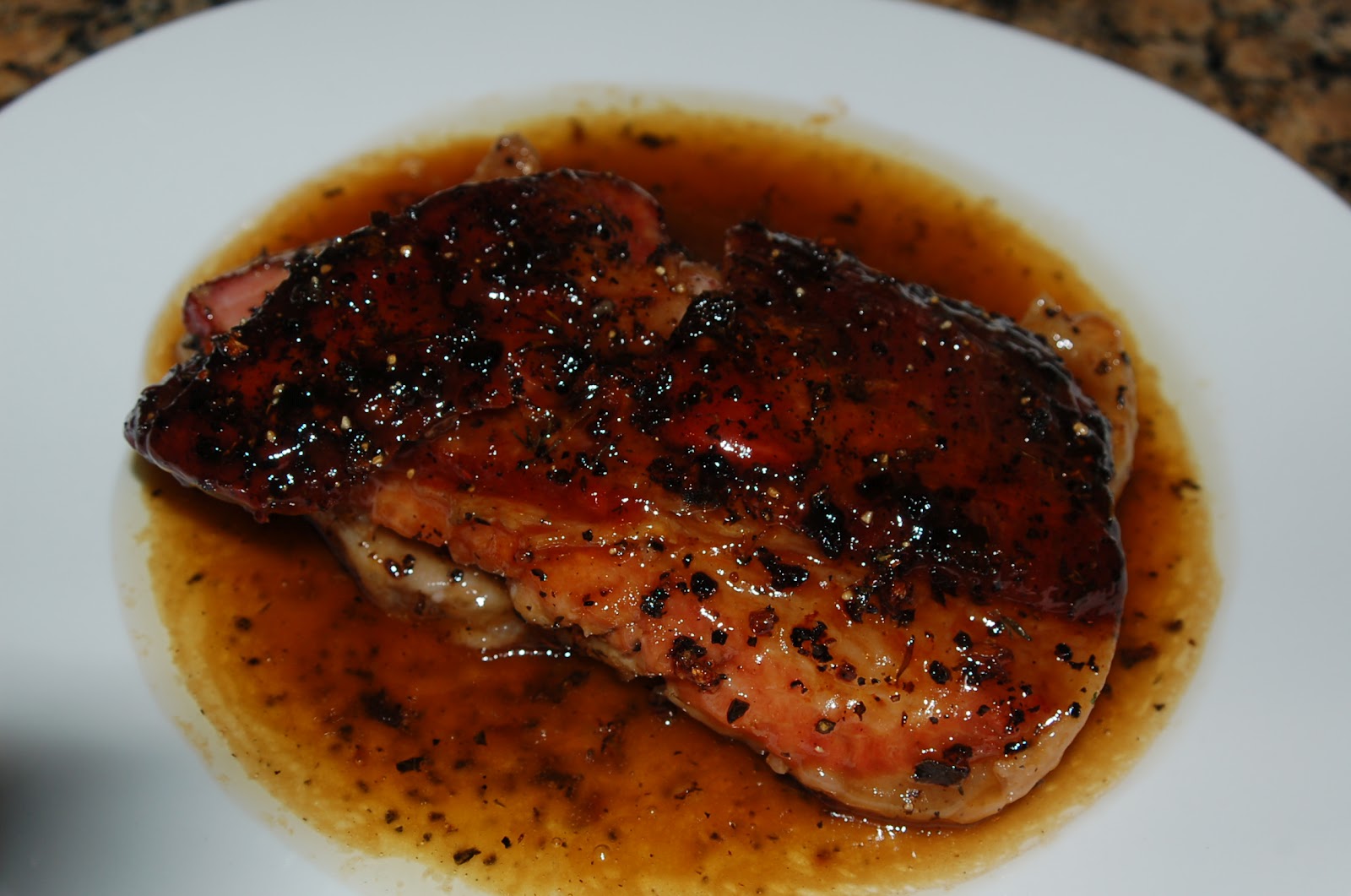
The slow roasting, with nothing more than a few herbs and a finishing glaze, completely changes the texture of the fat. It just melts in your mouth. One caution: you cannot eat much of this and a small 1.5 pound slab feeds 6 easily. It also needs to be served with a starch, like rice, couscous, polenta, potato.

While it takes a significant amount of time to roast pork belly, it is so worth it, and requires no tending. You rub it up, stick it in the oven and voila! Topped with a Makers Mark bourbon glaze and you have one delicious serving of heart-clogging proportions.

I found the recipe on the Maker’s Mark site, which encourages cooking with bourbon, obviously. But the glaze added just the right amount of flavor and complemented the pork perfectly. 


So next time you are feeling adventurous, stop by your local butcher (there is a really cute one at Robert’s of Woodside!), and pick up some pork belly for dinner.

Slow Roasted Pork Belly

1/2 cup Maker’s Mark® Bourbon
2 pounds pork belly, skin on
1 tablespoon kosher salt
1 teaspoon freshly ground white pepper
1 tablespoon fresh sage, minced
1 tablespoon fresh thyme, minced
2 tablespoons garlic, crushed and minced
1/4 cup honey
2 tablespoons sherry or apple cider vinegar
2 tablespoons butter
2 teaspoons kosher salt
1 teaspoon cracked black pepper

Preheat oven to 275°F. Using a sharp knife score the skin of the pork belly in a checkerboard design.

In a bowl combine the salt, pepper, sage, thyme and garlic. Rub the pork belly on both sides with mixture until evenly coated. Place pork belly in a roasting pan skin side up. Place in the oven and bake for 3-1/2 hours, turn oven to broil and cook for 10-12 minutes until the skin puffs up evenly. Remove from oven and let rest for 30-40 minutes at room temperature.

Using a serrated knife, cut the meat into 1/2-inch-thick pieces and reserve.

Place the honey, Maker’s Mark® Bourbon, vinegar, butter, salt and pepper in a large sauté pan. Place over medium high heat and reduce by a third. Place the pieces of crispy pork belly in the pan and increase to high heat. Cook until syrupy and glazes the pork belly. Remove from heat and keep warm.

Plate the meat, drizzling the remaining sauce atop and on the plate.

Wednesday, February 09, 2011

Makin’ Bacon

I have always loved cooking with my children. When they were little, they would sit on the counter and help add ingredients to the mixing bowl, happily licking the beaters afterward. They would stand on stools and stir pots, picked veggies from the garden to help make salads, and gleefully made my nana’s shortbread recipe, which they would mix only with their hands, butter and sugar gushing between their little fingers. But I still enjoy that kitchen time with my kids today, even though they are adults.


Brilliant Daughter is my frequent companion in both savory and sweet endeavors, and was my collaborator on Eat Drink Merry. She is my canning assistant every spring, summer, and fall and often brings some really good recipes to light. I spend far less often in the kitchen with Butcher Son and, not surprisingly, the main ingredient involves meat of some kind. We’ve tried more than a few sausage recipes and he experiments with marinades on a regular basis. More recently we have had a yen to try our hand at smoking.


So we started out with pork belly. Butcher Son brought home two slabs for us to try our hand at smoking.


I had purchased a bacon cure when we were out visiting family in Colorado last January (and which caused me a bit of grief at the airport due to its nitrate/nitrite content.) I poured over several of the books I had (Smoking Food: A Beginners Guide and Jam It, Pickle It,, Cure It) and came up with a bit of a hybrid cure. I mixed it up, rubbed it on and sealed the two slabs in Ziplocs. (I should note here that there was one small hesitancy on my part when rubbing up the belly. There were actually nipples on the belly, which were so pale and small, you might have missed them, but which was a vivid reminder—to me—that I was looking at what had been an animal. Some might find this a bit uncomfortable, but it is the reality of what feeds us.)


Each day I checked the plastic packages in the fridge, turning them over and poking and prodding to see how they were coming along. They were probably ready after seven days, but there was one little problem: We didn’t have a smoker. No one we know has a smoker. So, Butcher Son, who has a knack for being creative, asked around and found someone willing to donate an old Weber barbecue for transformation. And boy did it need some transforming.


When the Weber landed in our driveway it was a rusty, dirty, falling apart hunk of metal. But on his lunch hour Butcher Son took it apart and started cleaning it. He washed, he scrubbed, he sanded. Then the thing literally fell apart in his hands. So on his day off, he redrilled holes, put the legs back on with reinforcement, scrubbed some more, and then headed out to buy some charcoal and wood chips.


Last Thursday he assembled the grill, and we began the process to cold smoke the pork belly, after a 10-day cure in the refrigerator. For four hours, I babysat the smoker, adding coals and wood chips as needed, making sure that smoke was still curling out of the upper vents. I watched as the pork belly went from pale white to faintly brown, to heavily tea-stained slabs. I worried that the coals weren’t hot enough, that they were too hot, that they would go out. But everything went well. And we had our first product.


Friday morning, we sliced it up and fried a few the bacon on the stove. I always find it more gratifying to eat the things I have taken the time to make. In fact, I always prefer to make things from scratch and if I had all the time in the world, I would probably make just about everything myself. But I am a realist and I cannot store all the ingredients or equipment needed and I will probably never have that much time. (Now I understand why large families were the norm back in the day, as it takes a lot of hands to make your daily bread and butter…literally.)


And despite my worrying, the bacon tasted great. Smoky, not too salty. And really not all that hard to do. Just takes time and patience, and a little creativity from my son.